Turtle Mode
I want to be hard to reach, difficult to interrupt, and slow in my pursuits.
Orignally Published on Substack in May of ‘24
I've been experimenting with a low-information diet. This doesn't mean completely cutting myself off from the outside world, but intentionally evaluating where my information is coming from and how much of it I am absorbing on a daily basis. I'm living like a turtle and I'm loving it.
Quick check-in: How has your attention span been lately? How is your short-term recall? Are you more stressed than you've ever been? When you get a moment of peace and quiet, do you feel overwhelmed by everything you have to do? If you answered yes to most of these questions, you're overloaded.
I've explored extremes on the information overload and deprivation spectrum, and I was surprised to learn that the Goldilocks principle does indeed apply here. A certain amount of information is enough for me to absorb while still staying relevant, maintaining my mental sanity, living creatively, and completing commitments I have set out to achieve. That looks like about an hour or two reading a book, four hours of deep work (knowledge work), 30 minutes of social media, an hour of TV, and three in person meetings (about an hour). Anything more than this, and I'm not saving space to recharge or process information. This may not seem like a lot to you, and it looks light compared to my formerly burnt-out self. However, this now is the top end for me. I'm no longer acting as a receptacle for all the information in the world. I'm leaving space for my creativity and time to process complex information.
"Imagination is more important than knowledge" - Albert Einstein.
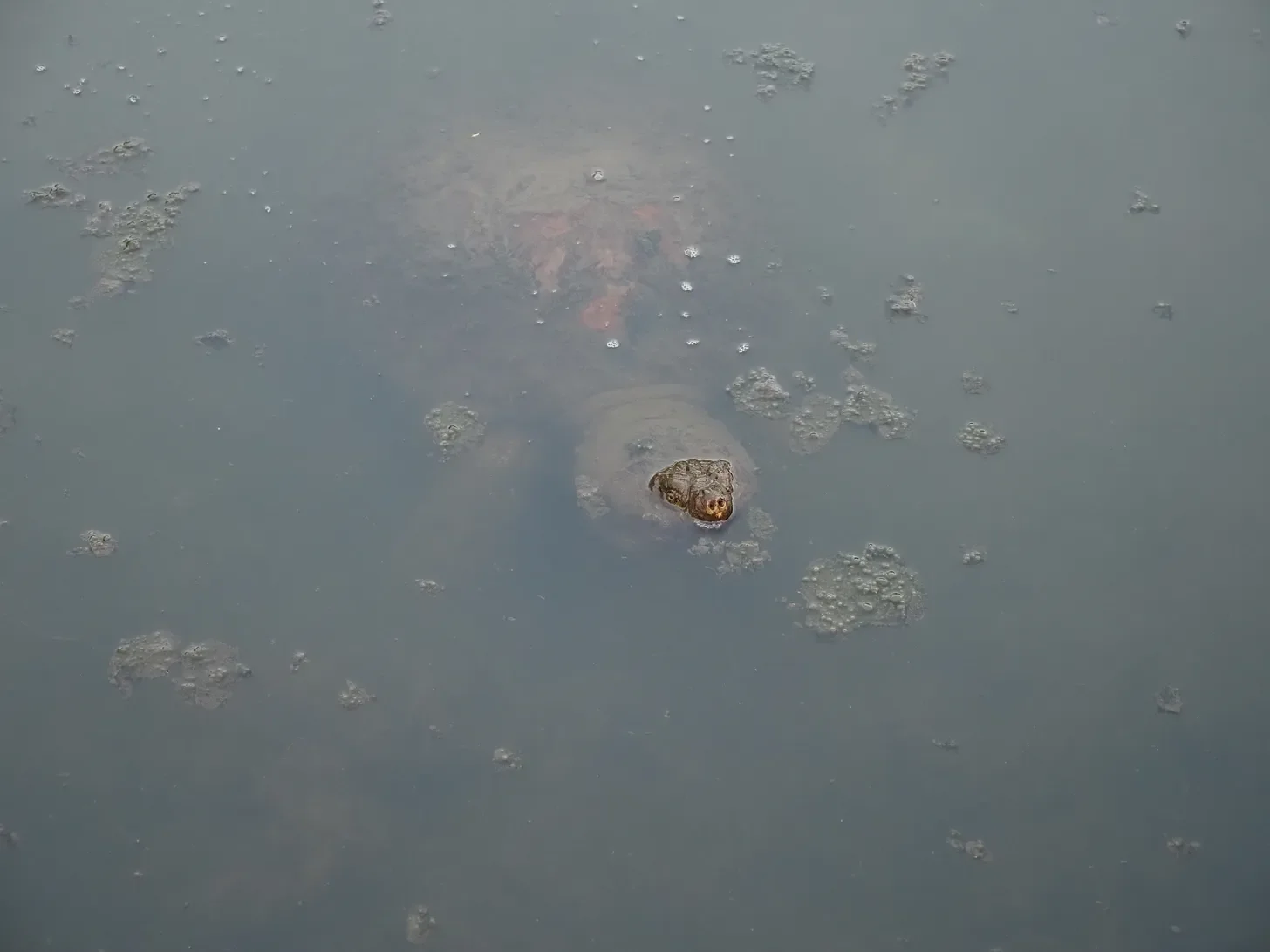
Common Snapping Turtle (Chelydra serpentina) moving slowly through pond scum.
In recent years, my creativity floundered—completely dried up. I was leaning too much on external inputs and not trusting my inner guidance and resourcefulness. I was so focused on packing every second with information consumption that I left no time to be bored. This is driven by my poor habits with technology and the addictive nature of social media apps. Unstructured downtime is critical for your brain to form connections between subjects, cement learning, and allow creativity to flow.
Does this example sound familiar?
"I'll get started on that next project as soon as I watch this YouTube video, read another book, take another course, or finish listening to that podcast."
I'd love to know the percentage of ideas that lose momentum and disappear when we make this type of "I'll do that after…" commitment to ourselves. In my case, it's been a very steep failure-to-launch ratio. If you have a good idea of what you want to do, then yes, it's important to absorb some information on where you might go next, but make it a priority to map out your thoughts and then move to a decision. Some of my favorite advice is to "limit your input, choose for yourself, and set a deadline for a decision." Process what you need to process, then move towards action. The further you delay a decision, the longer you'll deal with the issue.
A low-information diet made me nervous about missing out. "If I don't post on x platform at a certain rate or build my personal brand, I'll get forgotten, and no one will want to work with me." When I think like this, I am reminded to spend more time offline. Operating online makes us feel we should behave like computers with direct line access to unlimited information (relevant or not) and that we need to know the answer to everything at all times. You are allowed to take the time you need to think about things. You can say, "That's a great question, I don't know," and leave it at that. If you're interested, write it down and revisit it later. Give yourself time to contemplate. The whole nature of me or you can't be boiled down into an easily digestible "brand." We are undergoing continual transformation.
Common Snapping Turtle (Chelydra serpentina) moving slowly through pond scum.
I am in control of how I choose to spend my time. If I have five free minutes, I can use those to scroll mindlessly, or I can use them to brainstorm what's on my mind and free up some mental breathing room. I can go outside and walk, with my only aim being to follow what pleases me. There are many more nourishing things available to you if you put intention into how you're interacting with technology. The world becomes full of possibilities and opportunities for observation. Life no longer feels small and packed with frantic energy.
Elimination is a concept that isn't welcomed in Western society; it's misapplied to scarcity (by eliminating information sources, you would no longer have access to them should you need them — not the case; we live in a modern age, you can get what you need if you need it). Another fear of elimination is missing out. There is no limit to the number of ideas that occur in the world, no limit to connections, and no limit to news. It's natural to be behind. It takes time and effort to process and think through complex subjects. Take time to cultivate your opinions and be open to changing them. I find this to be the most crucial step in the recycling process, and it is often overlooked. "Reduce" where the inputs arrive, reduce the overall load on the system. When you are overwhelmed with information and stimulation, focused thinking is impossible.
Reducing your inputs allows your mind to grow quiet and provides space for new ideas. You are a treasure trove of experience and insight. You have a unique perspective that is worth considering, and now is the time to cultivate it. Where do you feel most relaxed? For me, my mind is most quiet when I am outdoors. When I am in nature, I am with myself, and that is where I feel connected to everything. I am present. Here, I am able to do my best thinking. Time slows down. I slow down.
My intention is to feel satisfied at the end of each day. That could look slightly different each day, but in the interest of keeping it simple, it's boiled down to a few questions I ask myself:
Did I spend meaningful time with my loved ones?
Did I allow ideas and thoughts to come in without judgment?
Did I spend time in nature?
Did I enjoy a few moments of quiet contemplation?
Did I share something of myself with someone else?
The low-information diet is a lifestyle choice now. I'm opting to be present, to live more fully, and to create more meaningful work. It's working so well that I'm hitting all the intentions I set out to do daily. If I hadn't reduced my mental input, I would have written "think about why you are overwhelmed" and left it on a to-do list. This task would bother me every few weeks but I'd never take action. I'd continue to fill every moment with email or my for you page (fyp). I'd never take a few moments to quiet myself and consider what type of relationship to information consumption would work best for me. When you reduce your inputs, you have the energy to prioritize the essential questions in your life. In our digital world it’s necessary to ask yourself, "How am I best served by technology?".
By limiting my inputs, the world's mundane and often terrible nature becomes less stressful and moves at a manageable pace. This is because I have set up boundaries to protect my headspace. When we reduce our inputs we are better prepared to take meaningful action. Trust me, life is far more lovely when we free ourselves from constant overstimulation. Be like a turtle and move slowly, every step placed with intention towards your aim.
My low information/turtle mode checklist:
- Camera
- Notebook
- Pen
- A novel or field guide in a subject you're interested in
- Dumb down your phone or brick your phone (leave it behind if you can)*
- Try not to rush through life
How to become:
Hard to reach:
Experiment with setting one day a week where you check social media
Experiment with setting a daily time to check your email and texts
Set up digital timers to understand your time online
Turn off your notifications
Remove distracting apps
Difficult to interrupt:
Remove yourself from distraction
Make distractions difficult to access (unplug the tv - adding additional steps makes it hard to fall back to routines that don’t serve you)
Find a quiet place to work and establish a routine
Leave your devices at home (if you can)
Slow in your pursuits:
Ask yourself regularly what you are interested in, and pursue finding good resources on those subjects
Take a few moments to map out the digital/physical media resources that are most important to you
Limit your access to algorithm-driven apps and auto-play videos
Remove the pressure to "create content". Share your work when you are ready to share.
